Monument Education
March 25, 2026
Gifford Monument Works
7 min read
Flat Marker, Slant, or Upright — Which Monument Should I Choose?
Choosing between a flat marker, slant, or upright monument? Learn the pros, cons, and costs of each headstone style from Gifford Monument Works in Ada, Oklahoma.
flat markers
slant markers
upright monuments
monument styles
cemetery rules
granite headstones
<article>
<p>When you're choosing a memorial for someone you love, one of the first questions you'll face is: <strong>what style of monument?</strong></p>
<p>If you've walked through a cemetery, you've seen the variety — from ground-level markers to towering upright stones. Each style has its own character, price point, and practical considerations. And while there's no "wrong" choice, understanding the differences can help you make a decision that honors your loved one and fits your family's needs.</p>
<p>At Gifford Monument Works, we've walked hundreds of families through this decision across Ada, Oklahoma, and the Dallas/DFW area. Here's what you need to know about the three main monument styles: flat markers, slant markers, and upright headstones.</p>
<h2>Flat Markers: Simple, Dignified, Ground-Level</h2>
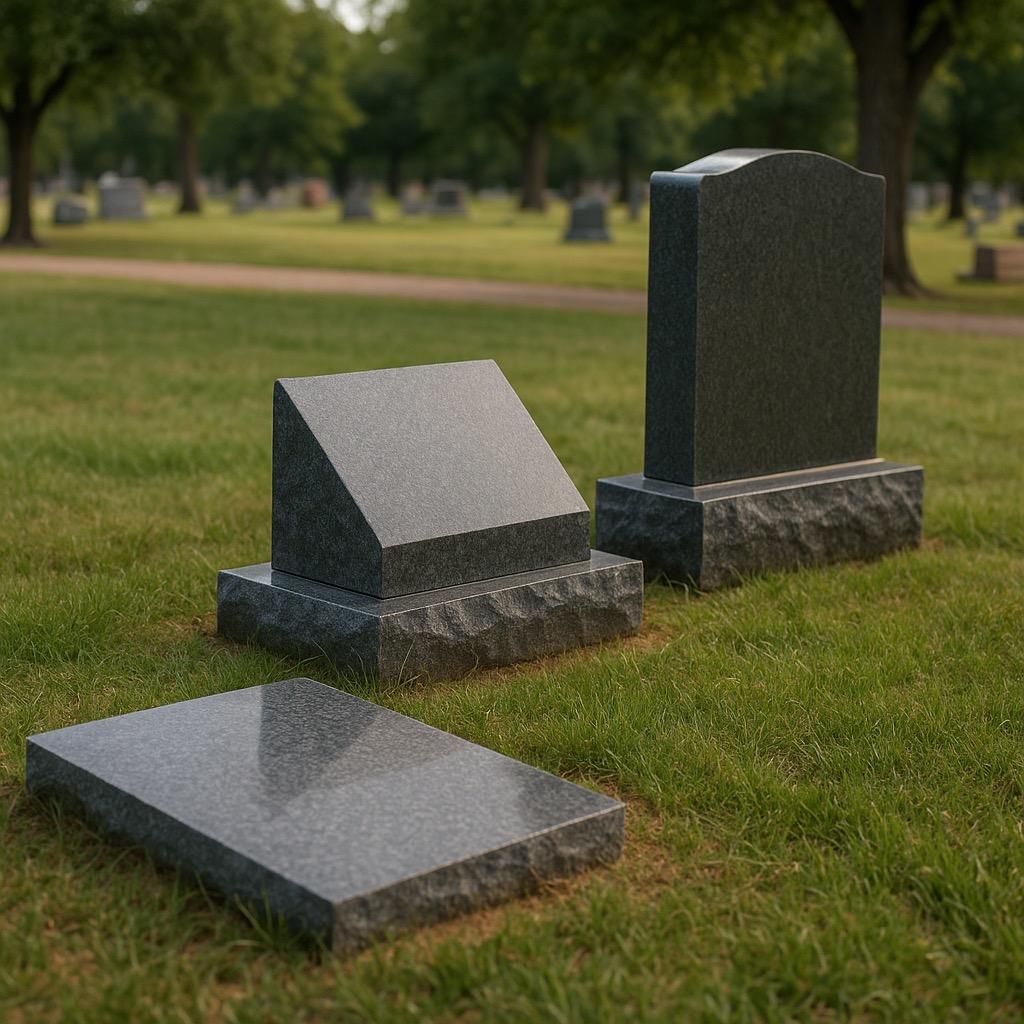
<p>Flat markers — sometimes called "grass markers" or "flush markers" — sit level with the ground. They're typically made from granite, bronze, or a combination of both, and they range in size from single markers (24" x 12") to large companion stones (48" x 14" or more).</p>
<h3>Pros of Flat Markers</h3>
<ul>
<li><strong>Most affordable option.</strong> Flat markers are the most budget-friendly monument style, making them accessible for families with tighter financial constraints.</li>
<li><strong>Cemetery-friendly.</strong> Many cemeteries — especially newer memorial parks — require flat markers to maintain a uniform landscape and make mowing easier.</li>
<li><strong>Clean, minimalist aesthetic.</strong> Some families prefer the understated elegance of a ground-level stone.</li>
<li><strong>Easy to maintain.</strong> Less surface area means less cleaning and upkeep over the years.</li>
</ul>
<h3>Cons of Flat Markers</h3>
<ul>
<li><strong>Limited visibility.</strong> From a distance, flat markers blend into the landscape. If you want the memorial to stand out, a flat marker may not be the best choice.</li>
<li><strong>Less space for design.</strong> With a horizontal surface, you're limited in how much text, imagery, and personalization you can include.</li>
<li><strong>Can collect debris.</strong> Leaves, grass clippings, and dirt can accumulate on the surface, requiring occasional cleaning.</li>
</ul>
<p><strong>Who chooses flat markers?</strong> Families looking for a simple, respectful memorial — or those required to use them by cemetery rules. They're also popular for veterans, as the VA provides free flat markers for eligible service members.</p>
<h2>Slant Markers: A Middle Ground</h2>
<p>Slant markers — also called "pillow stones" or "bevel markers" — sit at an angle, with the back raised and the front sloping down toward the ground. They're mounted on a granite base and typically measure 16" to 20" tall at the back.</p>
<h3>Pros of Slant Markers</h3>
<ul>
<li><strong>Better visibility than flat markers.</strong> The angled face makes the stone easier to spot from a distance.</li>
<li><strong>More room for design.</strong> The slanted surface offers more vertical space for names, dates, epitaphs, and artwork.</li>
<li><strong>Still cemetery-approved.</strong> Most cemeteries that allow uprights also allow slants — and some that don't allow uprights will still accept slants.</li>
<li><strong>Affordable upgrade.</strong> Slants are more expensive than flat markers but significantly cheaper than full uprights.</li>
</ul>
<h3>Cons of Slant Markers</h3>
<ul>
<li><strong>Not always allowed.</strong> Some cemeteries — particularly memorial parks — require flat markers only.</li>
<li><strong>Less dramatic than an upright.</strong> If you want a monument that truly stands out, a slant may feel like a compromise.</li>
</ul>
<p><strong>Who chooses slant markers?</strong> Families who want more presence than a flat marker but aren't ready to invest in a full upright. It's a popular choice for companion monuments, where two names share a single stone.</p>
<h2>Upright Monuments: The Traditional Choice</h2>
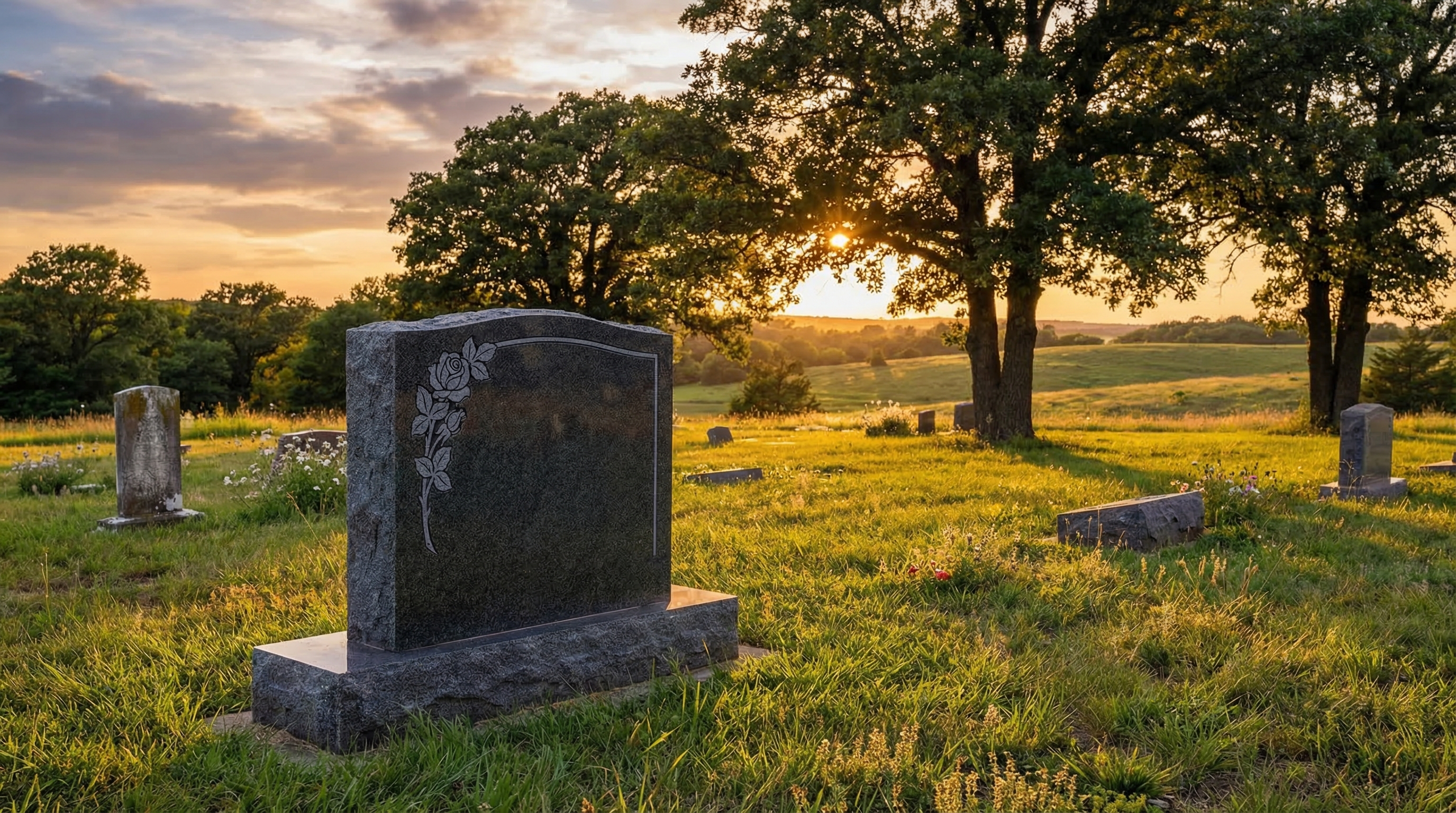
<p>Upright monuments are what most people picture when they think of a headstone — a vertical stone mounted on a horizontal base. They range from modest 18" x 24" single monuments to grand 48" x 36" family estates.</p>
<h3>Pros of Upright Monuments</h3>
<ul>
<li><strong>Maximum visibility.</strong> Uprights are the most commanding option, visible from across the cemetery.</li>
<li><strong>Most space for personalization.</strong> You can include portraits, detailed epitaphs, religious imagery, hobby artwork, and more.</li>
<li><strong>Timeless and traditional.</strong> For many families, an upright stone feels like the "right" way to honor someone.</li>
<li><strong>Room for multiple names.</strong> Companion uprights can feature two names side-by-side, or you can add family names over generations.</li>
</ul>
<h3>Cons of Upright Monuments</h3>
<ul>
<li><strong>Higher cost.</strong> Uprights are the most expensive option due to the additional granite and labor involved.</li>
<li><strong>Not allowed everywhere.</strong> Many newer cemeteries don't permit uprights to maintain a uniform look.</li>
<li><strong>More maintenance.</strong> The larger surface area means more cleaning over time — though quality granite is incredibly durable.</li>
</ul>
<p><strong>Who chooses upright monuments?</strong> Families who want a lasting, prominent tribute — and who have the budget and cemetery approval to make it happen. Uprights are especially popular for companion stones and family plots.</p>
<h2>How to Decide: Questions to Ask Yourself</h2>
<p>Choosing between a flat marker, slant, or upright comes down to a few key questions:</p>
<ol>
<li><strong>What does the cemetery allow?</strong> Always check the cemetery's monument regulations first. Some cemeteries require flat markers; others allow all three styles.</li>
<li><strong>What's your budget?</strong> Flat markers are the most affordable, slants are mid-range, and uprights are the premium option. If you're planning ahead, you might want to <a href="/value-engineering">view our monument packages</a> to see transparent, fixed pricing for each style.</li>
<li><strong>How much personalization do you want?</strong> If you envision a detailed laser-etched portrait, a favorite Bible verse, or custom artwork, you'll need the space an upright or slant provides.</li>
<li><strong>What feels right to you?</strong> Some families are drawn to the classic dignity of an upright. Others appreciate the simplicity of a flat marker. Trust your instincts.</li>
</ol>
<h2>Real Examples from Gifford Monument Works</h2>
<p>We've helped families across southern Oklahoma and North Texas choose the right monument style for decades. Here are a few common scenarios:</p>
<ul>
<li><strong>A widow in Ada</strong> chose a flat companion marker for herself and her late husband — budget-friendly, cemetery-approved, and easy to maintain for her children.</li>
<li><strong>A Dallas family</strong> selected a slant marker for their father, a retired teacher. The angled face gave them room for a meaningful quote from his favorite book.</li>
<li><strong>A ranching family in Ardmore</strong> went with a large upright monument featuring laser-etched cattle brands — a tribute that truly stood out and told their story.</li>
</ul>
<p>Every family's situation is different. Our job is to help you navigate the options and create something meaningful.</p>
<h2>Cemetery Rules in Oklahoma and North Texas</h2>
<p>One thing we've learned serving families in Ada, Oklahoma City, Dallas, and the surrounding areas: <strong>cemetery rules vary widely</strong>.</p>
<p>Older cemeteries — especially rural and church cemeteries — tend to allow all monument styles. Newer memorial parks often require flat markers only to maintain a manicured lawn appearance. Some cemeteries restrict the size of uprights or require specific base dimensions.</p>
<p>Before you commit to a monument style, we'll help you:</p>
<ul>
<li>Contact the cemetery to confirm what's allowed</li>
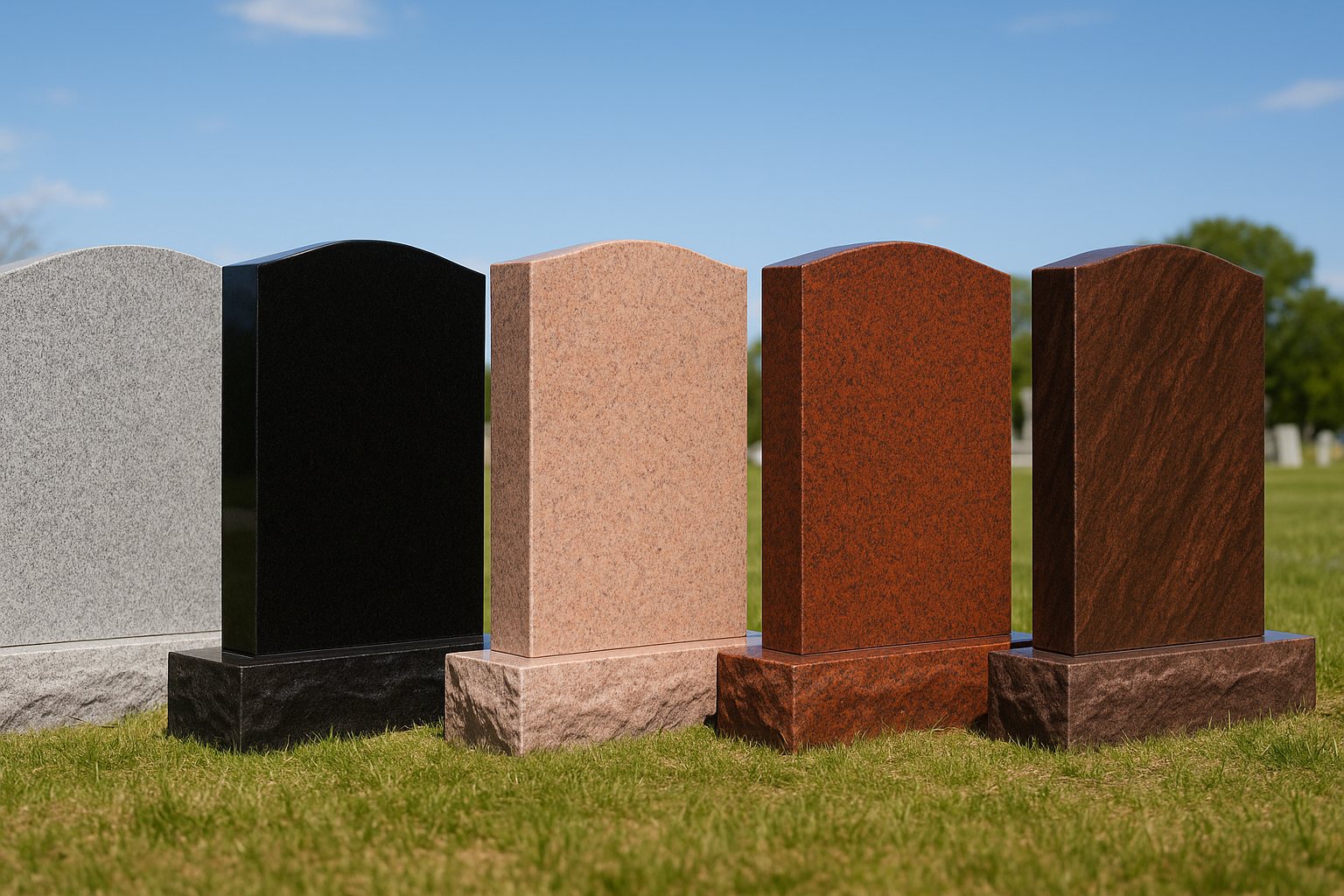
<li>Review any size, color, or material restrictions</li>
<li>Ensure your design meets all regulations</li>
</ul>
<p>We handle the legwork so you don't have to worry about your monument being rejected.</p>
<h2>Making the Choice: You Don't Have to Decide Alone</h2>
<p>Choosing a monument is a big decision — and it's okay if you're not sure what you want yet.</p>
<p>At Gifford Monument Works, we walk families through this process every week. We'll show you examples of each style, explain the pros and cons, and help you find a design that fits your vision and your budget.</p>
<p>Whether you're planning ahead for yourself or choosing a memorial for someone you've lost, we're here to guide you with honesty, transparency, and care.</p>
<p><strong>Ready to explore your options?</strong> Reach out to Gifford Monument Works in Ada, Oklahoma. We serve families across southern Oklahoma and the Dallas/DFW metroplex with personalized, high-quality monuments at fair, fixed prices.</p>
</article>