Cleaning Grave Headstones: Complete Restoration Guide
Cleaning grave headstones is an act of respect and also a careful craft. This guide walks you through safe and effective approaches to restoring grave markers.
- Avoid chemical damage. Strong alkalis or acids may react with stone minerals. For instance, bleach can etch marble and limestone.
- Limit moisture trapping. Coatings or sealants that trap moisture can cause freeze-thaw damage and biological growth below the surface.
- Respect context. Cemeteries often have historical value. Cleaning should not erase signs of age that are part of a site’s story.
Volunteer groups and government agencies suggest conservative cleaning practices: soft-bristle brushes, plenty of water, and neutral or stone-specific cleaners as needed, rather than bleach or abrasive tools. The National Park Service, which advises on cemetery preservation, explicitly warns against power washers and harsh cleaners and stresses that cleaning may accelerate deterioration if done incorrectly.
Know the Material: Granite, Marble, Sandstone, Bronze, and Concrete
Understanding what your grave headstone is made from dictates every cleaning decision, and knowing the intricacies of the cleaning process can influence material choice when designing a headstone. Different materials weather and react to cleaning agents in different ways.
Granite
Granite is hard and durable. Polished granite tolerates gentle scrubbing and mild cleaners well. Still, avoid abrasive pads and high-pressure washing since they can dull polished finishes and damage inscriptions. Commercial cleaners made for stone, or plain soap and water, are usually sufficient for moderate soiling. Prosoco and other conservation suppliers offer product lines specifically designed for granite care.
Marble and Limestone (calcareous stones)
Marble and limestone are softer and more chemically reactive because they’re calcium carbonate-based. Acidic cleaners, bleach, and abrasive scrubbing should be avoided. Use water, pH-neutral soap, and very soft brushes. When biological growth is present, use conservator-recommended biocides in controlled applications, as improper treatments risk etching and loss of detail. The U.S. Department of Veterans Affairs and National Park Service guidelines emphasize gentleness for these materials.
Sandstone and other porous stones
Porous stones absorb water and cleaners more readily. Poultices are sometimes used to pull stains from these stones, but they should be chosen and applied with caution. Sandstone can delaminate if aggressively saturated or if incompatible solvents are used.
Bronze markers and plaques
Bronze develops a patina that many conservators consider historically valuable. Clean bronze gently with mild detergent and water, and avoid harsh polishes, unless the client wants the original sheen restored. For stubborn corrosion or verdigris, consult a professional conservator.
Testing and identification
If unsure what material you have, perform a small, unobtrusive test: a drop of diluted vinegar on a hidden area will fizz on calcitic stones (marble/limestone) but not on granite. Record test spots photographically. When in doubt, prioritize the gentlest approach (water and soft brushes) and consult local experts.
Permissions, Safety, and Ethics Before You Begin
Before touching a grave headstone, confirm you have the right to do so. For private family plots, permission usually comes from the family or cemetery management. For historic or non-family markers, seek written permission from the cemetery superintendent or town clerk. Many cemeteries have regulations about what cleaning agents and methods are allowed. The Good Cemeterian and other preservation groups remind volunteers to always get permission before cleaning someone else’s monument.
Safety and environmental considerations
- Personal protective equipment. Wear gloves, eye protection, kneepads, and a dust mask when working with biocides or dried debris.
- Water supply. Bring fresh water when cemetery access is limited to avoid spreading contaminants. Many volunteers carry 5-gallon containers.
- Containment. Avoid allowing runoff with biocides to enter storm drains or sensitive plantings. Use minimal amounts and plan rinsing carefully.
- Respect graveside decorum. Tidy up flowers and mementos respectfully, work quietly, and leave a note if you’ve cleaned a marker so family members know.
Ethical rules of thumb
- Never attempt structural repairs without permission.
- Avoid altering historical patina unless instructed.
- Document the stone before and after cleaning with photos and notes so changes are traceable.
Tools, Supplies, and Approved Cleaners
Basic toolkit
- Soft nylon brushes (various sizes), such as a toothbrush for lettering or larger soft brushes for fields.
- Plastic scrapers and wooden spatulas to remove crusted biological growth without scratching.
- Buckets and distilled water (if local water is hard or chlorinated).
- Sprayers for applying cleaners or biocides.
- Microfiber towels for gentle drying.
- Kneeling pad and small garden tools for surrounding vegetation care.
Recommended cleaners
- Plain water is the first choice for most light cleaning.
- Non-ionic, pH-neutral detergents. Orvus or mild dish soap for stubborn dirt.
- Biological cleaners. D/2 Biological Solution and products like Prosoco ReVive or Cathedral Stone Bio-Cleaner are used widely to treat lichen, algae, and moss. These are favored because they’re formulated to remove biological growth without harsh chemistry. Use them as directed and in line with cemetery policies.
What to avoid
- Bleach and household ammonia can react with stone and damage metal.
- Wire brushes and metal scrapers will scratch and remove original surfaces.
- Power washers can force water into cracks and accelerate deterioration. The Cemetery Conservators for United Standards advise against their use.
Extra items for advanced work
- Poultice materials (e.g., paper clay or commercial poultice products) for localized stains on porous stones.
- Epoxy and stone adhesives should only be used by professional restorers. Adhesives that trap moisture can cause long-term damage if used incorrectly.
Step-by-Step Cleaning Procedures by Material
General pre-clean steps (apply to all materials)
- Photograph and document the headstone. Note inscriptions, cracks, and biological coverage.
- Remove loose debris and plant material by hand. Do not pry at crusted lichen.
- Wet the stone thoroughly to reduce absorption of cleaners.
Granite (recommended) method
- Mix a pH-neutral soap with water and wet the stone.
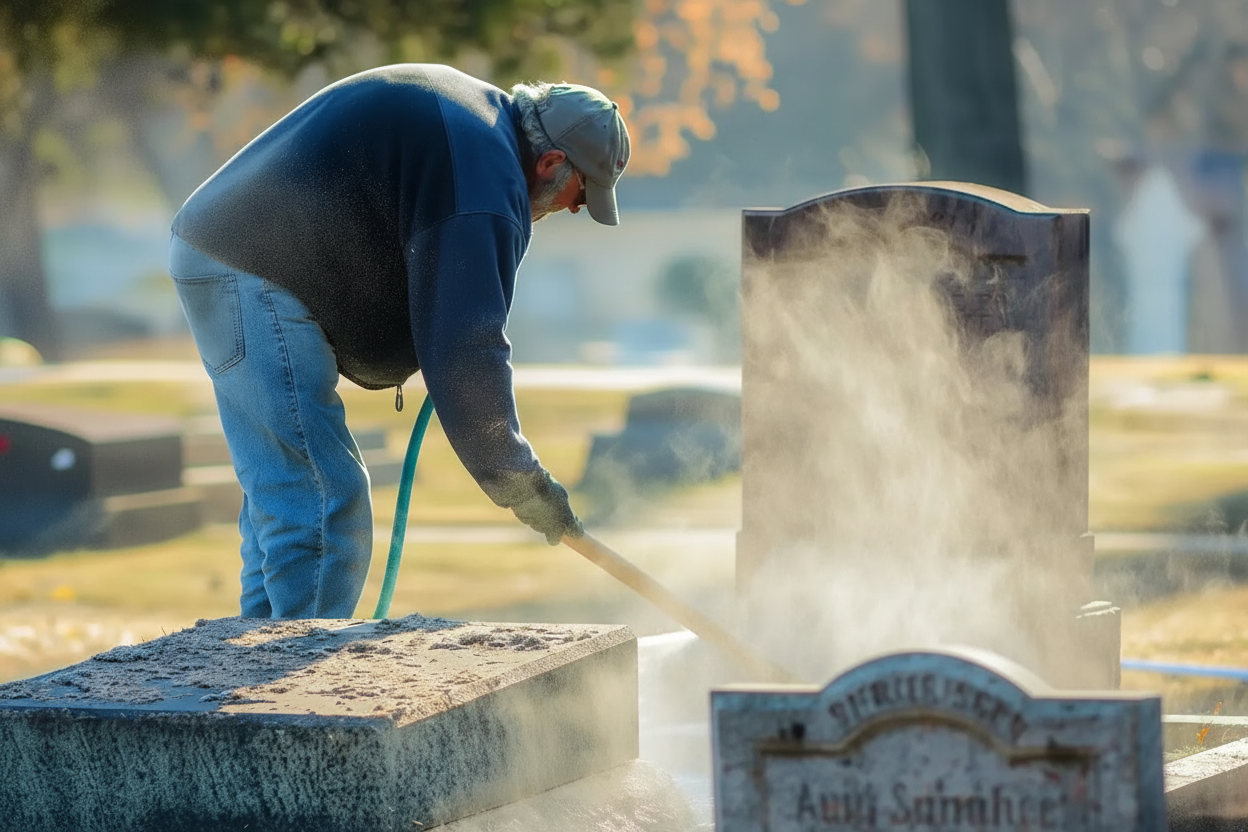
- Use soft nylon brushes to scrub gently in circular motions, working from bottom to top to avoid streaking.
- Rinse thoroughly with clean water.
- For biological growth, apply a biocide like D/2 or ReVive. Let sit according to the manufacturer’s instructions, and then gently agitate and rinse.
- Avoid abrasive pads that can scratch polished granite faces.
Prosoco’s guidance for granite cleaning emphasizes short contact time, gentle scrubbing, and complete rinsing.
Marble and limestone
These require extra caution. Wet the stone and use only distilled water and a pH-neutral soap. Test any biocide on an inconspicuous spot. For stubborn stains, consider a conservator consultation. The National Park Service warns that cleaning may accelerate deterioration and to use the gentlest means possible.
Sandstone and porous stones
Apply minimal water. For stains, a controlled poultice can draw them out, although this should be tested and used sparingly. Avoid letting cleaners sit and soak repeatedly into the stone. Sandstone can delaminate under improper treatment.
Bronze and metal plaques
Clean with mild soap and water and soft cloths. If corrosion is present, consult a metal conservator. Avoid aggressive chemical polishes that remove the protective patina unless a full restoration is intended.
Post-cleaning inspection
After cleaning, photograph again and note any new issues. For biological treatment, some products continue working for days or weeks. Record the product used and the date of application for future maintenance.
(Specific product instructions vary. Always follow manufacturer directions and cemetery rules.)
Tackling Biological Growth: Lichen, Moss, Algae
Biological growth is one of the most common challenges for grave headstones. Lichen and algae can hide inscriptions and, over time, their root structures and acids can damage stone surfaces.
Safe biocide approach
Use a product formulated for monuments, such as D/2 Biological Solution or ReVive. These are designed to remove biological films without aggressive chemistry. Apply on a damp stone if the manufacturer advises, let it work for the recommended contact time, gently scrub with soft brushes, and rinse. Documentation from government and preservation groups supports these products as effective when used correctly.
Application tips
- Apply in moderate temperatures (not freezing, not very hot sun).
- Repeat applications are sometimes necessary. Allow time between treatments to see the full effects.
- For historic stones, prioritize minimal disturbance and consult a conservator for heavy lichen growth.
For follow-up, you can re-treat as needed, but avoid annual heavy cleanings. The National Park Service recommends cleaning no more than once a year for most markers to reduce the risk of accelerated wear.
Repair and Restoration Beyond Cleaning
Cleaning is often the first step before repair. Restoration tasks include resetting leaning stones, replacing broken pieces, and repairing chips or deep erosion.
When to repair vs when to call a pro
- Call a professional when a headstone is cracked, pieces are detached, or the stone is dangerously unstable. Resetting and structural repairs often require heavy equipment, foundation work, and knowledge of historical materials.
- DIY repairs are limited to small, non-structural tasks like cleaning out dirt or removing surface graffiti with approved cleaners.

Common professional repairs
- Re-bedding and resetting. Stones that lean or sink need proper foundation work and may require jacking and leveling. Saving adjacent markers requires skill to avoid collateral damage. Preservation groups provide best-practice guidelines for resetting.
- Epoxy joins and pins. For broken pieces, conservators use specialized stone epoxy and stainless pins. These must match thermal properties and not trap moisture.
- Surface consolidation. Fragile stone surfaces may benefit from consolidation treatments applied by specialists.
Cost and expectations
Minor clean-and-polish jobs can be DIY or low-cost pro jobs. Full structural restorations, particularly for historic or severely damaged stones, may cost more and take longer due to curing times and required permits.
Preventive Maintenance and Long-Term Care Plans
A proactive approach reduces the need for major restoration. Create a simple maintenance plan for any grave headstone you care for.
Maintenance checklist
- Annual inspection. Photograph and note the condition once a year, ideally in spring after the freeze-thaw season.
- Gentle cleaning schedule. For many stones, cleaning every 1–3 years is sufficient unless biological growth returns.
- Vegetation control. Trim grass and plants at the base carefully to avoid root damage. Don’t plant trees close to headstones.
- Record-keeping. Keep dates of cleanings, products used, and before/after photos. This helps future caretakers and preserves a project history.
Community and volunteer programs
Volunteer clean-up days can be effective but require training, supervision, and permission. When organized properly, they are a great way to preserve local cemetery heritage and spread knowledge about safe practices. Groups like Cemetery Conservators for United Standards and the National Park Service provide training resources and standards for volunteers.
Cost, Timeframes, and What to Expect
DIY time and costs
- A simple cleaning with water and soap typically takes 30 minutes to 2 hours per grave headstone, depending on size and soil level. Supplies may cost $20–$100 for brushes, soap, and small tools.
- Using specialized biocides or poultices raises costs to $30–$100 per stone in product spend.
Professional services
Professional cleaning and light restoration often range from $100 to $500, depending on region, stone size, and difficulty. Full structural restoration or resetting can cost several hundred to a few thousand dollars. These are ballpark figures, and you should always get written estimates and references. Industry write-ups and local monument companies often publish cost guides.
Timeframes
- Simple cleanings: same day.
- Biocide treatments may need multiple visits spaced over weeks to achieve the full effect.
- Structural repairs and resetting: days to weeks, depending on curing and permit needs.
Case Studies and Examples
Volunteer clean-up: small rural cemetery
A volunteer group documented a multi-day cleanup in which volunteers were trained on NPS guidance. They cleaned dozens of markers using soft brushes, D/2 where permitted, and careful documentation. Results: improved legibility and restored dignity to neglected family plots without introducing damage. This mirrors many successful community campaigns and emphasizes training and permissions.
Professional restoration: fractured marble headstone
A family hired a professional after a historic marble tablet cracked. The process included controlled cleaning, pinning with stainless steel rods, epoxy joins, and re-bedding on a new concrete foundation. The restoration required drying times and careful matching of materials to avoid mismatched expansion rates. Outcome: the inscription and form are preserved with structural stability. Industry guides recommend professional intervention for this level of damage.
FAQs
Can I use bleach to clean a grave headstone?
No. Bleach can chemically damage many stones, especially marble and limestone, and it can harm surrounding plants. Use water, pH-neutral soap, or monument-specific biocides instead.
What product do professionals use for biological growth?
Many professionals use D/2 Biological Solution or commercial products like Prosoco ReVive. These are formulated for monuments and are widely recommended when used per instructions.
How often should a grave headstone be cleaned?
For most markers, cleaning every 1–3 years as needed is appropriate. Avoid annual aggressive cleanings. NPS guidance recommends a conservative frequency to limit wear.
Can I reset a leaning headstone myself?
Minor straightening by professionals is best. Resetting often requires foundation work and proper anchoring. DIY attempts can cause further damage or safety hazards. Consult a professional for re-bedding.
What should I document before cleaning?
Photograph the stone from multiple angles, note inscriptions and damages, and log the date, products, and methods you plan to use. Keep records for future caretakers.
Conclusion
Cleaning and restoring grave headstones is a respectful, practical way to honor those who came before us. Done carefully, it preserves inscriptions, slows deterioration, and keeps cemeteries legible and welcoming. The essential rules are simple: know the stone you’re working on, get permission, and err on the side of gentleness. Start with water and a soft brush, use pH-neutral soaps when needed, and use monument-specific biocides like D/2 or ReVive only when necessary and permitted. Avoid bleach, power washers, and metal scrapers as these cause irreversible damage.
For small jobs, families and trained volunteers can achieve meaningful results with modest investment in the right tools and knowledge. For stones with structural issues (cracks, broken pieces, and sinking foundations), professional restorers should be engaged. Their skill with adhesives, pins, and re-bedding techniques preserves both the memorial and its historical integrity. Document every step, keep records of products used, and schedule gentle maintenance rather than frequent aggressive cleanings.
If this guide helped you, please share it with friends or a local cemetery volunteer group. We’d love to hear about your experience: What type of grave headstone are you caring for, and what challenge are you facing right now?
When to hand it to a professional
Gentle washing is something a family can do. Flaking stone, lifting or sunken bases, lost lettering, and biological growth that keeps returning are not — those need equipment and judgement, and the wrong product can etch a stone permanently.
Gifford Monument Works has cleaned and restored monuments across Oklahoma and North Texas since 1936. If you would like someone to look at yours, see our headstone cleaning and restoration service or tell us the cemetery and we will take it from there.